| Top 10% Own 49% of Wealth | CAT Hits Record €1.1 Billion in 2025 | New Savings & Investing Scheme |
|
Dear Reader Spring has officially arrived. As always, it’s marked by the annual trade-off: one less hour of sleep in exchange for longer, brighter evenings and a noticeable lift in mood. While we’re edging toward the Summer Equinox, the winter coat hasn’t quite been retired yet, nature likes to keep us guessing. For many, it signals the end of Lent a 40-day test of discipline and the welcome pause of the Easter break. Whether you observe it or simply enjoy the change of pace, I hope you get a chance to step away from the desk. A reminder: rest isn’t a reward, it’s a productivity strategy. _________________________________________________________Wealth in Ireland: The Big PictureIrish household wealth continues to grow. By the end of Q3 2025, total net wealth reached €1.3 trillion, rising by €48.3bn in just one quarter. Housing remains the dominant driver, increasing by €31.1bn over that period. However, wealth remains concentrated. The top 10% of households hold 49% of total net wealth. Total net wealth of Irish households: For context, the top 10% contribute 63% of all income tax and USC, while the bottom 80% contribute 21%. Broadly speaking, the top 10% earn €102,000+, while the bottom 80% earn €70,000 or less. Property continues to underpin the Irish balance sheet, accounting for 61% of total household assets. Financial assets (€589bn) are largely split between deposits and pensions/insurance. Balance sheet composition of Irish households, by wealth decile: There is some nuance beneath the surface. Lower-wealth households tend to hold more cash and carry more debt, while wealthier households are more diversified and carry less debt. Gini coefficient of wealth inequality: Interestingly, rising property values have slightly reduced measured wealth inequality, as mid-to-lower deciles benefited from rising house prices. That said, this data largely excludes those without property, highlighting an important blind spot in how we measure “wealth” in Ireland. _________________________________________________________CAT Hits Record Levels: Planning Matters More Than EverCapital Acquisitions Tax (CAT) receipts (inheritance and gift tax) exceeded €1.1bn in 2025, reflecting both rising asset values and increased transfers of wealth. CAT lifetime thresholds have fluctuated significantly over time from €542,544 in 2009, down to €225,000 in 2015 post 2008 crisis, and now back to €400,000, against a backdrop of rising (and often illiquid) wealth particularly in property. Estate planning is no longer optional. Effective planning isn’t about one clever strategy. It’s about combining:
…and, importantly, time. Structuring a Will and putting an Enduring Power of Attorney in place requires a certain level of financial and personal maturity. It’s not always comfortable to think about but it’s necessary. Just like insurance, preparing for life’s known unknowns doesn’t make them happen, it simply ensures you’re ready if and when they do. _________________________________________________________A Potential Shift in How We InvestThe Government is exploring a new savings and investment scheme that could materially change how Irish investors are taxed. Inspired by Sweden’s ISK model, the proposal includes:
This comes at a time when Irish households hold €170bn in deposits. With inflation steadily eroding cash, the objective is clear:
The scheme is expected to progress in 2026, with potential inclusion in Budget 2027. _________________________________________________________Investment Markets UpdateMarkets: A Month of Moving Parts Renewed geopolitical tensions, particularly in Iran, pushed energy prices higher, feeding directly into inflation expectations. Oil, gas, and fertiliser costs rose sharply, with knock-on effects across transport, utilities, and consumer prices. In the US, inflation remains sticky. Core PCE sits above target, and the final stretch back to 2% is proving difficult. The Federal Reserve held rates steady (3.50%–3.75%), but the tone has shifted. Markets are recalibrating expectations, with rate cuts now looking further away than previously assumed. Meanwhile, the labour market is showing early signs of cooling. February US nonfarm payrolls declined by 92,000 jobs and the unemployment rate edged up to 4.4%. A single data point doesn’t make a trend but it adds to a more cautious outlook. Energy prices sit upstream of the entire economic cycle. They feed into inflation, which shapes interest rate policy, drives company valuations, and ultimately filters through to hiring decisions. Employment conditions, in turn, influence consumer confidence and spending, completing a feedback loop that markets continuously attempt to price in. The result? A temporary pullback in global equities. Private Markets Under the Microscope Recent developments in private credit and private equity have raised questions around:
When funds offer periodic liquidity but hold illiquid assets, pressure can build quickly if investors head for the exit. Forced selling rarely ends well. For now, risks appear contained but the environment is becoming more selective. Manager quality, asset selection, and liquidity discipline matter more than ever. AI: From Hype to Reality The conversation around AI is evolving. The question is no longer what it could do, but whether it can deliver real productivity gains (generative -> agentic) to justify the scale of investment. At the same time, AI is becoming tied to broader economic forces:
It’s no longer just a tech or economic story, it’s increasingly political. _________________________________________________________The Week in Charts with Charlie BilelloCharlie Bilello of Creative Planning (Kansas, USA) neatly encapsulates this interconnected dynamic, using clear visual chart data to illustrate how these forces ripple through the system: _________________________________________________________The Ozempicization of the EconomyKyla Scanlon has a rare ability to distil the intersection of markets, economics, culture, and wealth into something both accessible and insightful. She captures the prevailing mood with remarkable clarity. Her latest Substack post, “The Ozempicization of the Economy” is a particularly compelling read. https://kyla.substack.com/p/the-ozempicization-of-the-economy _________________________________________________________Optimism BiasPersonal finance and investing are shaped as much by human psychology as by numbers. Heuristics and cognitive biases profoundly influence how we perceive risk and make decisions. Markets often unfold in ways that feel counterintuitive, developments take longer to materialise than expected, and then accelerate far more quickly than we thought possible. This disconnect fuels cognitive dissonance, the tendency to ignore or rationalise information that contradicts our investment decisions. In reality, shifting investor sentiment can matter as much as, if not more than, intrinsic value (what an asset is truly worth). Volatile psychology, skewed perception, overreaction, herd behaviour, and rapid contagion of ideas all contribute to market movements. Add to this irrationality, wishful thinking, forgetfulness, and a lack of dependable guiding principles, and it becomes clear that the greatest risks are often behavioural rather than financial. Tali Sharot masterfully unpacks the optimisim bias in the below video: _________________________________________________________What would $100 invested in 1965 be worth today? The answer depends entirely on where it was allocated. Equities stand apart. A $100 investment in the S&P 500, assuming dividends were reinvested, would have compounded roughly 435-fold over the past six decades. Other asset classes, while still delivering positive returns, lag meaningfully by comparison. Data from NYU Stern professor Aswath Damodaran highlights the dispersion. Real estate, as measured by the Case-Shiller Home Price Index (price only), shows more modest appreciation, while cash, proxied by three-month U.S. Treasury bills, barely keeps pace over the long term. The table below presents nominal (pre-inflation) outcomes across six major asset classes from 1965 to 2025, showing the year-end value of a $100 investment in each. Gold tells a more nuanced story. While it does not match the compounding power of equities, its strength has tended to emerge during periods of inflation, monetary instability, and declining real interest rates. Its recent resurgence reflects many of these same forces, persistent inflation pressures, elevated geopolitical uncertainty, and a reassessment of fiat currency stability. In that context, gold’s role is less about long-term growth and more about preservation and diversification when confidence in financial assets begins to waver. _________________________________________________________Adviser CornerHere are some topics employees, business owners and retiree's discussed over the past month:
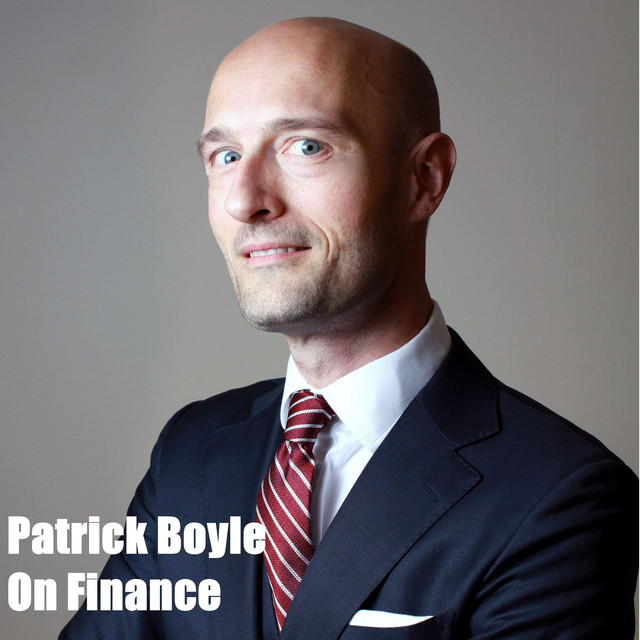
Sadly, I've yet to see a potential client that has been advised correctly from a financial planning perspective in setting up and structuring financial products to deliver real life outcomes in the context of their personal goals. _________________________________________________________📚 Recommended resources 💡JP Morgan Guide To The Markets (EMEA Monthly): JP Morgan Guide to the Markets EMEA 27th March 2026.pdf Podcast recommendations: Patrick Boyle on Finance by Patrick Boyle: The Crisis Hidden Inside the Iran War
The Memo by Howard Marks: Behind the Memo: The Indispensability of Risk with Howard Marks, Bruce Karsh and Maurice Ashley
Rational Reminder by Benajmin Felix & Cameron Passmore: The Problem with Private Markets
_________________________________________________________If you’d like support across personal finance education, coaching, advice, or technology, I’d be happy to help. Depending on what you're looking for you can schedule a meeting through the Vantage website: https://vantagefp.ie/ Please find useful marketing material resources below: Successful Investing in Pictures.pdf Vantage Investment Policy Statement.pdf Vantage A-Z of Financial Planning.pdf Vantage What We Believe.pdf Vantage Business Owner's Guide.pdf If you found this month’s newsletter useful, please feel free to share it with family, friends, or colleagues who might also benefit. Constructive feedback is always welcome. If there is a personal finance topic you would like covered in a future edition, just let me know. Until next month. Kind regards, Ken Mason CFP® Certified Financial Planner™ Tel: (01) 539 2670 Mobile: 083 803 2008 Email: ken.mason@vantagefp.iewww.linkedin.com Vantage Financial Planning Limited T/A Money Mentor is regulated by the Central Bank of Ireland C434033. Registered in Ireland, Company Registration Number 672038. Registered Address: Unit 3, 14 Ransford, Sandford Avenue, Dublin 4, D04WY16. |


Vantage Financial Planning
Dear Reader As we approach the August Bank Holiday weekend, Ireland is preparing to slip into summer’s version of Christmas, when the professional world slows down and many of us finally step away from our desks. Unplugging rarely comes naturally, but its importance should not be underestimated. Counterintuitively, taking time away from work is essential to sustaining our energy, perspective and productivity. I hope you find time over the coming weeks to properly switch off, recharge and...
Dear Reader School is out for the summer, the World Cup is in full swing, and warmer days have arrived, with the odd spell of tropical weather thrown in for good measure. July, and especially August, usually bring a welcome pause in the year, as families step back from busy routines to rest, recharge and reset. For many households, the academic year is the real year within the calendar year, quietly shaping family life, work decisions and financial plans. Ireland is preparing to take up the...
Dear Reader As the academic year draws to a close and the June bank holiday weekend approaches, summer has well and truly announced itself. Mobile homes are being spruced up, holiday plans are taking shape, and that familiar seasonal anticipation is in the air. There is nothing quite like it. Whether the old adage of "sell in May and go away" proves prophetic this year remains to be seen, but May has once again delivered its share of twists and turns. Personal finance continues to sit at the...